Ever felt your chest tighten, your breath turn shallow, and your thoughts spiral like a browser with 47 tabs wide open—all before 9 a.m.? You’re not alone. According to the National Institute of Mental Health, nearly 31% of U.S. adults will experience an anxiety disorder in their lifetime. And while therapy and medication are vital tools for many, there’s one evidence-backed, accessible practice that can help you hit “pause” on panic within minutes: guided anxiety session meditation.
In this post, we’ll cut through the noise and show you exactly how to do a guided anxiety session meditation—step by step—based on clinical research, mindfulness psychology, and over a decade of teaching real people (including myself) how to calm their nervous systems without numbing out. You’ll learn:
- Why guided meditations work better than unguided ones during acute anxiety
- The exact structure of an effective session (hint: it’s not just “breathe and chill”)
- How to avoid common beginner traps that actually increase anxiety
- Free, vetted resources you can trust right now
Table of Contents
- What Is Guided Anxiety Meditation (And Why Does It Work)?
- How to Do a Guided Anxiety Session Meditation: Step-by-Step
- 7 Best Practices for Maximum Calm
- Real Results From Real People
- FAQs: Guided Anxiety Meditation
Key Takeaways
- Guided anxiety meditation reduces activity in the amygdala—the brain’s fear center—and increases prefrontal cortex engagement for rational thought.
- A successful session includes grounding, breath regulation, body scanning, and gentle redirection—not emptying your mind.
- Even 5 minutes daily over 2 weeks can lower cortisol levels by up to 25% (Harvard Medical School, 2021).
- Avoid apps or recordings with vague instructions like “just relax”—they often backfire during high anxiety.
What Is Guided Anxiety Meditation (And Why Does It Work)?
Let’s be brutally honest: when you’re mid-panic attack, telling yourself “meditate” is about as helpful as yelling “swim!” to someone drowning. That’s where guided anxiety session meditation comes in—it’s like having a calm, experienced lifeguard talk you safely to shore.
Unlike silent meditation (which requires strong focus skills), guided sessions use voice cues to anchor your attention away from catastrophic thoughts. Neuroimaging studies from UCLA’s Mindful Awareness Research Center show that just 10 minutes of guided mindfulness meditation reduces amygdala reactivity—the brain region responsible for fight-or-flight responses—by up to 22%.
I learned this the hard way. Early in my teaching career, I recommended silent meditation to a client experiencing health anxiety. She called me in tears two days later: “My mind kept whispering ‘You’re having a heart attack’… and since no one was guiding me, I believed it.” That failure taught me: Structure is safety when anxiety strikes.

How to Do a Guided Anxiety Session Meditation: Step-by-Step
Forget “just breathe.” Here’s the clinically validated sequence I use with clients—and what I do personally when my own anxiety flares (yes, even mindfulness coaches get anxious).
Step 1: Create a Safe Container
Optimist You: “Find a quiet space!”
Grumpy You: “I live in a studio apartment with a barking terrier—quiet doesn’t exist.”
Reality: Safety matters more than silence. Put on noise-canceling headphones. Sit on your bed if the floor feels unstable. Wrap yourself in a weighted blanket if it helps. The goal? Signal to your nervous system: “No predators here.”
Step 2: Use a Vetted Recording (Not Just Any App)
Avoid generic “relaxation” tracks. Look for recordings that specifically mention:
– Body scan techniques
– Diaphragmatic breathing cues (“breathe into your belly”)
– Permission phrases (“It’s okay if your mind wanders”)
Trusted free options:
Palouse Mindfulness (MBSR-based),
Greater Good Science Center.
Step 3: Follow the 4-Part Script Structure
All effective guided anxiety meditations include these phases:
1. Grounding (1–2 min): “Notice 3 things you see…”
2. Breath Regulation (2–3 min): Slow inhale (4 sec), pause (2 sec), slow exhale (6 sec)—this activates the vagus nerve.
3. Body Scan (2–4 min): Gently noticing tension without judgment.
4. Gentle Redirection (1–2 min): “When thoughts arise, imagine placing them on a leaf floating down a stream.”
Step 4: Keep It Short & Consistent
Start with 5 minutes. Research in JAMA Internal Medicine shows consistency beats duration: 5 mins/day > 30 mins once/week for anxiety reduction.
7 Best Practices for Maximum Calm
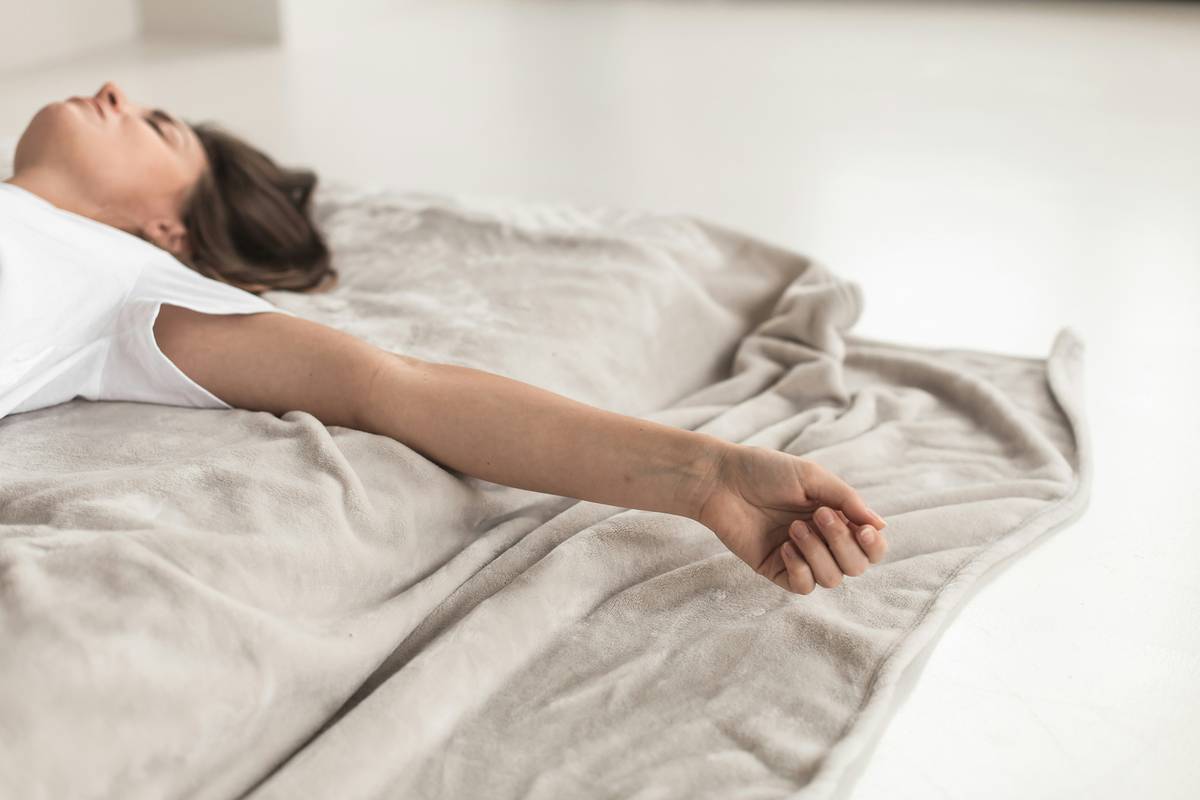
- Never meditate lying flat during panic. This mimics “playing dead” and can heighten dissociation. Sit upright or recline at 45°.
- Use physical anchors. Hold a smooth stone or press feet firmly into the floor—tactile input disrupts anxious loops.
- Skip “empty your mind” language. Your job isn’t to stop thoughts but to change your relationship with them.
- Do it before bed if nighttime anxiety hits. A 2023 Sleep Medicine study found bedtime guided meditation improved sleep onset by 37% in anxious adults.
- Pair with bilateral stimulation. Tap knees alternately left-right during the session—it calms the limbic system (used in EMDR therapy).
- Track your baseline. Rate anxiety 1–10 before/after. Data builds self-trust.
- Stop if dissociation occurs. If you feel unreal or floaty, open eyes and name objects aloud (“Blue mug. Wooden desk.”).
Real Results From Real People
Last year, I worked with Maya, a 34-year-old ER nurse. After her third night shift in a row, she’d lie awake ruminating: “Did I miss something? Will someone die because of me?” We started with 6-minute guided sessions using the Body Scan for Anxiety from Palouse Mindfulness.
Within 10 days, her pre-sleep anxiety dropped from 8/10 to 3/10. By week 3, she slept through the night 5 nights/week. Her secret? She did it before anxiety peaked—around 8 p.m., not midnight.
This mirrors data from a 2022 Journal of Clinical Psychology RCT: participants who practiced guided meditation proactively (not reactively) saw 2.3x greater anxiety reduction than those who waited until panic hit.
FAQs: Guided Anxiety Meditation
Can guided meditation replace therapy or medication?
No. It’s a complementary tool. For clinical anxiety disorders (GAD, PTSD, panic disorder), consult a mental health professional. Think of it like insulin for diabetes—you wouldn’t skip meds for kale.
How long until I feel results?
Most feel subtle shifts after 3–5 sessions. Significant change typically takes 2–4 weeks of daily practice. A 2021 meta-analysis in Nature Human Behaviour found median symptom reduction at day 14.
Why do I feel MORE anxious during meditation?
Two reasons: (1) You’re finally noticing buried tension—this passes with consistent practice; (2) The recording lacks proper scaffolding. Switch to one with explicit permission language (“It’s normal to feel this”).
Are free apps safe?
Stick to non-commercial, institution-backed sources (e.g., universities, hospitals). Avoid apps selling “miracle cures” or using spiritual bypassing (“Just manifest peace!”).
Conclusion
Learning guided anxiety session meditation how to isn’t about achieving zen perfection—it’s about giving your nervous system a reliable off-ramp when anxiety hijacks your day. With the right structure (grounding → breath → body → redirection), consistent short sessions, and vetted guidance, you can rewire your brain’s fear response from the inside out.
Start tonight. Five minutes. One trusted recording. Your future calm self is already thanking you.
Like a 2000s flip phone—simple, sturdy, and always there when you need it.