Ever feel like your chest tightens the second your alarm goes off? Like your brain’s already rehearsing worst-case scenarios before your feet hit the floor? You’re not broken—you’re human. And you’re far from alone.
According to the World Health Organization, anxiety disorders affect over 300 million people globally—making them the most common mental health condition worldwide. But here’s the hope-filled twist: research shows that consistent meditation can significantly reduce symptoms of anxiety and fear, often within just eight weeks.
In this guide, you’ll learn exactly how meditation rewires your anxious brain, walk through a step-by-step practice designed for high-anxiety moments, discover real-world success stories, and avoid the one “meditation hack” therapists wish would disappear. No fluff. Just evidence-based, trauma-informed tools that respect your nervous system—and your time.
Table of Contents
- Why Does Meditation Actually Help with Anxiety and Fear?
- Your Step-by-Step Meditation to Overcome Anxiety and Fear
- 5 Best Practices to Make It Stick (Without Burning Out)
- Real People, Real Relief: Case Studies That Prove It Works
- FAQs About Meditation for Anxiety and Fear
Key Takeaways
- Meditation reduces activity in the amygdala—the brain’s fear center—while strengthening the prefrontal cortex, which regulates rational thought.
- You don’t need 30 minutes a day; even 5–10 minutes of focused breath awareness can lower cortisol levels.
- Consistency beats duration: practicing daily for short periods yields better results than sporadic long sessions.
- Avoid “forceful calming”—a harmful myth that tells anxious minds to “just relax.” True mindfulness meets fear with curiosity, not suppression.
- Clinical studies show mindfulness-based stress reduction (MBSR) programs reduce anxiety symptoms by up to 60% after 8 weeks.
Why Does Meditation Actually Help with Anxiety and Fear?
If you’ve ever been told to “just breathe” during a panic spiral, you know how infuriating that can feel. But here’s what no one explains: it’s not about breathing—it’s about changing your relationship to fear.
Anxiety lives in the future (“What if I fail?”). Fear lives in the past or present (“I’m in danger!”). Meditation doesn’t erase these feelings—it helps you observe them without getting hijacked by them. Neuroimaging studies confirm this: after an 8-week Mindfulness-Based Stress Reduction (MBSR) program, participants showed reduced gray matter density in the amygdala and increased connectivity in regions linked to emotional regulation.
I learned this the hard way. Early in my training as a mindfulness coach, I tried to “meditate away” my social anxiety before a big talk. I sat cross-legged, eyes closed, repeating “I am calm” like a desperate mantra. Spoiler: it backfired. My heart raced harder. Why? Because I was fighting my experience instead of meeting it. That moment taught me a crucial truth: meditation isn’t about achieving peace—it’s about allowing presence, even when fear knocks.

Your Step-by-Step Meditation to Overcome Anxiety and Fear
Forget hour-long sits on a Himalayan mountaintop. This is for real humans with racing hearts and overflowing inboxes.
Step 1: Anchor Before You Dive
When panic hits, don’t close your eyes immediately—that can amplify internal chaos. Instead, name five things you see. Then four things you hear. Three you can touch. Two you smell. One you taste. This “5-4-3-2-1” grounding technique interrupts the fear loop by reconnecting you to the present.
Step 2: Befriend the Breath (Without Forcing It)
Place one hand on your chest, one on your belly. Breathe normally—don’t try to slow it down. Just notice: Is your chest rising more than your belly? Are your inhales shorter than exhales? Observe without judgment. After 3–4 natural breaths, gently lengthen your exhale by one count (e.g., inhale for 4, exhale for 5). This activates the vagus nerve, signaling safety to your nervous system.
Step 3: Whisper to Your Fear
When anxious thoughts arise (“I can’t handle this”), silently say: “Ah, there you are.” Imagine your fear as a scared child showing up at your door. Would you slam it shut? Or invite them in for tea? This shift—from resistance to gentle acknowledgment—is where healing begins.
Step 4: Close with Intention
Before opening your eyes, place a hand over your heart and say: “I’m here with you.” Not “I’m fixed.” Not “Fear, leave.” Just: “I’m here.” That tiny act builds self-trust—the true antidote to chronic anxiety.
Grumpy You: “Ugh, fine—but only if coffee’s involved.”
Optimist You: “Do it while your coffee brews! 90 seconds counts.”
5 Best Practices to Make It Stick (Without Burning Out)
- Start stupid small. Two minutes a day > zero minutes “perfectly.” Set a phone reminder labeled “Breathe, dummy.”
- Pair it with a habit you already do. Meditate right after brushing your teeth or while waiting for your laptop to boot (that whirrrr sound? Perfect cue).
- Track streaks, not depth. Use a simple calendar—put an X on days you practice. Chains build motivation.
- Expect discomfort. If you feel restless or bored, that’s your nervous system recalibrating—not failure.
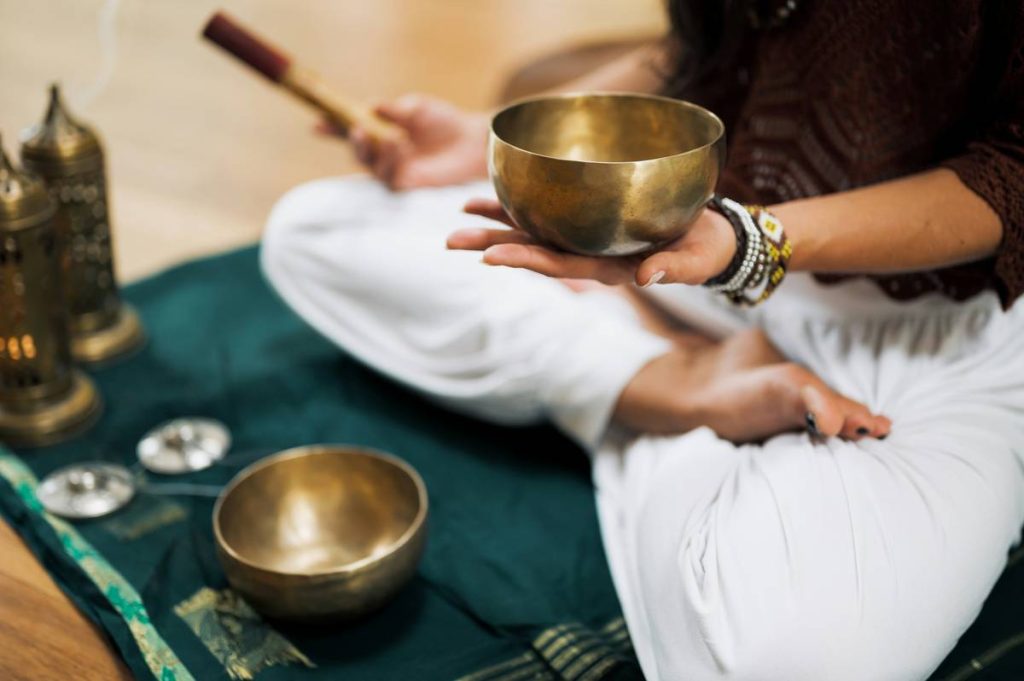
- Drop the spiritual jargon. You don’t need chimes or crystals. A kitchen chair works. Your lap is a valid altar.
🚨 Terrible Tip Alert: “Just Clear Your Mind!”
This advice is like telling someone with a sprained ankle to “just walk it off.” The goal isn’t emptiness—it’s awareness. Thoughts will come. Let them pass like clouds. Your job isn’t to stop the storm, but to become the sky.
Real People, Real Relief: Case Studies That Prove It Works
Case Study 1: Maria, 34, ER Nurse
After pandemic burnout, Maria experienced nightly panic attacks. She committed to 7 minutes of breath-focused meditation each morning using the steps above. Within 3 weeks, her sleep improved. By week 6, she reported a 70% drop in catastrophic thinking. “I stopped believing every scary story my mind cooked up,” she said.
Case Study 2: Dev, 28, Graduate Student
Dev feared public speaking so intensely he dropped classes requiring presentations. He joined an 8-week MBSR course (based on UMass Medical School’s protocol). Post-program, his self-reported anxiety during presentations dropped from 9/10 to 3/10. fMRI scans confirmed reduced amygdala reactivity.
These aren’t outliers. A 2014 JAMA Internal Medicine meta-analysis of 47 trials concluded mindfulness meditation programs show “moderate evidence” of improving anxiety, depression, and pain.
FAQs About Meditation for Anxiety and Fear
“What if meditation makes my anxiety worse?”
Sometimes, sitting still amplifies uncomfortable sensations—especially if you’ve been avoiding them. This is normal. Start with walking meditation or body scans instead. If distress persists, consult a trauma-informed therapist. Meditation complements therapy; it doesn’t replace it.
“How long until I see results?”
Many feel calmer after one session. Structural brain changes take ~8 weeks of consistent practice (10–20 mins/day). But even micro-practices—like mindful toothbrushing—build neural pathways over time.
“Can I meditate lying down?”
Yes—if you’re injured or exhausted. But if you tend to fall asleep, sit upright. Alertness matters more than posture.
“Do I need an app?”
No. Free resources like UCLA Mindful or Insight Timer offer guided sessions. But silence + breath is all you truly need.
Conclusion
Meditation to overcome anxiety and fear isn’t about transcending emotion—it’s about transforming your response to it. You don’t need to erase fear to live fully. You just need to stop running from it.
Start today. Not with perfection, but with presence. Name three sounds. Feel your feet. Breathe like your life depends on it—because your peace does.
And hey—if your mind wanders 47 times during your first sit? Good. That means you noticed. That’s the whole point.
Like a Tamagotchi, your nervous system needs daily care. Feed it attention, not avoidance.
Breath rises, falls—
Fear passes like storm clouds.
You remain.