Ever sat bolt upright at 3 a.m., heart hammering, replaying that awkward thing you said in 2012—while your cat judges you from across the room? You’re not alone. Over 40 million adults in the U.S. grapple with anxiety disorders (NIMH, 2023), and most of us have tried “just breathe”… only to realize we’ve been holding our breath for the last 90 seconds.
If you’re here, you’re likely searching for more than platitudes. You want real, doable meditation practices for anxiety—ones backed by neuroscience, tested in real life, and stripped of spiritual fluff. In this guide, you’ll learn:
- Why certain meditation styles actually rewire anxious brains
- Step-by-step routines you can start tonight—even if you’ve never meditated before
- What NOT to do (I once meditated while doomscrolling—spoiler: it made things worse)
- Real-world examples of how 10 minutes a day shifted chronic anxiety into manageable calm
Table of Contents
- Key Takeaways
- Why Do Meditation Practices for Anxiety Actually Work?
- Step-by-Step Guide to Starting Meditation for Anxiety
- 7 Best Practices That Make or Break Your Practice
- Real-Life Examples: How Meditation Changed Lives
- FAQs About Meditation and Anxiety
- Conclusion
Key Takeaways
- Not all meditation is equal for anxiety—mindfulness and body scan techniques show the strongest clinical evidence.
- Consistency beats duration: 5–10 minutes daily yields better results than 30 minutes once a week.
- Avoid “forcing calm”—this paradoxically increases anxiety. Acceptance is the goal, not suppression.
- Apps like Insight Timer or UCLA Mindful offer free, research-backed guided sessions.
- Meditation reduces amygdala reactivity—the brain’s fear center—within 8 weeks (Harvard Medical School, 2011).
Why Do Meditation Practices for Anxiety Actually Work?
Anxiety isn’t just “in your head”—it’s a physiological cascade. When triggered, your amygdala fires, cortisol floods your system, and your prefrontal cortex (the rational part) gets hijacked. Meditation doesn’t erase stressors—it rewires your response to them.
Neuroimaging studies confirm that regular mindfulness meditation thickens the prefrontal cortex and shrinks the amygdala, literally calming your brain’s alarm system (Hölzel et al., Psychiatry Research, 2011). Think of it like training a hyper-vigilant guard dog to stop barking at every leaf.
I learned this the hard way. Early in my journey as a mindfulness coach, I recommended transcendental meditation to a client with panic disorder. She reported increased dissociation. Why? TM’s mantra-based focus can feel too abstract during acute anxiety spikes. Later, a body scan practice anchored her in physical sensation—safe, grounded, present.
Optimist You:
“Your brain can change! Neuroplasticity is real!”
Grumpy You:
“Yeah, but only if I don’t fall asleep halfway through. Can I meditate lying down?”
Step-by-Step Guide to Starting Meditation for Anxiety
How do I start meditating when my mind won’t shut up?
Welcome to being human. Your job isn’t to silence thoughts—it’s to notice them without chasing or judging. Here’s your no-BS starter plan:
- Pick a time that sticks. Right after brushing your teeth? During lunch? Anchor it to an existing habit.
- Start with 5 minutes. Set a gentle timer (no jarring alarms!).
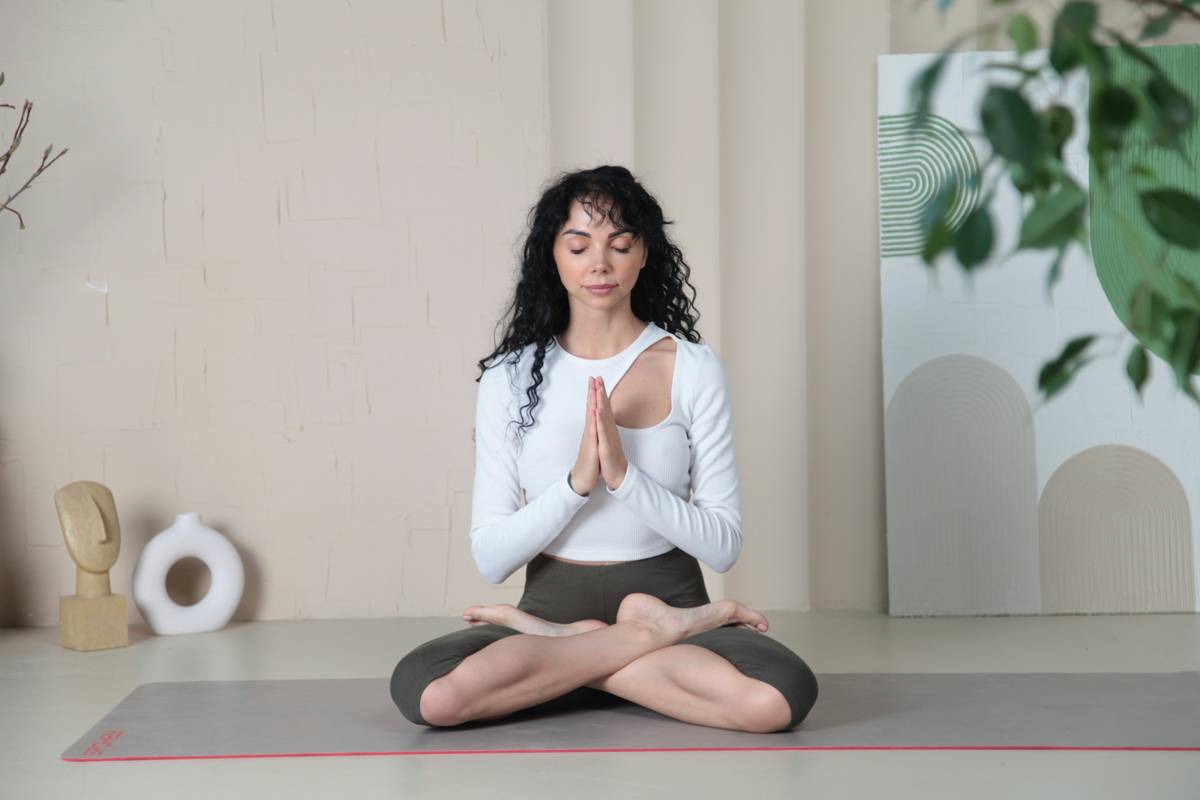
- Sit comfortably. On a cushion, chair, or even the floor—spine reasonably straight, hands resting.
- Focus on your breath. Not deep breathing—just natural inhales and exhales. Notice the cool air entering your nostrils, the rise of your belly.
- When your mind wanders (it will!), gently say “thinking” and return to breath. No scolding. This *is* the practice.
What if sitting still makes me more anxious?
Try walking meditation: Walk slowly, feeling each foot lift, move, and settle. Or use a body scan: Mentally sweep from toes to crown, noticing sensations without fixing them.
Optimist You:
“You’re building a mental muscle!”
Grumpy You:
“My mental muscle feels like overcooked spaghetti. But fine—I’ll try five minutes.”
7 Best Practices That Make or Break Your Practice
Most people quit because they expect instant zen. Real talk: Meditation for anxiety works like flossing—boring, essential, and cumulative.
- Be consistent, not perfect. Miss a day? Resume tomorrow. No guilt.
- Use guided meditations early on. Apps like UCLA Mindful (free!) offer sessions specifically for anxiety.
- Avoid meditating right after caffeine or heavy meals. Your nervous system needs baseline calm.
- Label emotions gently. Instead of “I’m freaking out,” try “There’s tightness in my chest.” Observation diffuses intensity.
- Don’t chase relaxation. The goal is awareness—not bliss. Chasing calm = performance anxiety about calm. Ugh.
- Pair with journaling. After meditating, jot down one thing you noticed. Patterns emerge over time.
- Track subtle shifts. Noticed you paused before snapping at your partner? That’s success.
TERRIBLE TIP DISCLAIMER:
“Just meditate harder!” Nope. Forcing focus = mental white-knuckling. You’re not failing—you’re learning to soften.
Real-Life Examples: How Meditation Changed Lives
Case Study 1: Sarah, 34, Generalized Anxiety Disorder
Sarah spent years in therapy and on meds (still uses low-dose SSRIs). At my suggestion, she added 10-minute morning body scans. Within 6 weeks, she reported fewer 3 a.m. spirals. At 12 weeks, she cut her “emergency” Xanax use by 70%. Her words: “It’s like I finally have an off-ramp from panic highway.”
Case Study 2: Marcus, 28, Social Anxiety
Marcus avoided group meetings. We started with breath-focused meditation + loving-kindness phrases (“May I be safe… May others be safe”). After 8 weeks, he volunteered to lead a team sync. Not cured—but functional. His insight: “Meditation didn’t make me fearless. It made fear manageable.”
RANT SECTION:
Can we retire “just meditate” as advice? Anxiety isn’t laziness—it’s a neurobiological loop. Telling someone to “meditate more” without guidance is like handing a map to someone who’s never driven. Meet people where they are.
FAQs About Meditation and Anxiety
How long until I see results from meditation for anxiety?
Some feel calmer after one session. Clinical changes (like reduced amygdala reactivity) appear in 8 weeks with daily practice (Goyal et al., JAMA Internal Medicine, 2014).
Can meditation make anxiety worse?
Temporarily, yes—especially if you have trauma or severe panic. Sitting quietly can amplify uncomfortable sensations. If this happens, shorten sessions, use grounding techniques (e.g., naming 5 things you see), or work with a therapist.
What’s the best type of meditation for anxiety?
Mindfulness-Based Stress Reduction (MBSR) and body scan meditations have the strongest evidence. Avoid overly abstract or visualization-heavy practices initially—they can increase dissociation in anxious minds.
Do I need an app?
No, but beginners benefit from structure. Free options: UCLA Mindful, Insight Timer, or the CDC’s mindfulness resources.
Conclusion
Meditation practices for anxiety aren’t about escaping reality—they’re about befriending it, moment by messy moment. You don’t need hours, incense, or a Himalayan cave. Just 5 minutes, gentle curiosity, and the willingness to return—again and again—to your breath.
Start small. Be kind when your mind races. And remember: Every time you notice you’re lost in worry and choose to come back? That’s not failure. That’s the workout.
Like a Tamagotchi, your nervous system thrives on consistent, tiny acts of care.
Breathe in, breathe out—
Mind storms pass, sky remains.
Anchored in now.