Ever felt your heart pound like a kick drum during a 3 p.m. work meeting—despite nothing actually being wrong? You’re not alone. According to the National Institute of Mental Health, nearly 20% of U.S. adults experience an anxiety disorder each year. And while therapy and medication are powerful tools, many turn to meditation as a first-line defense. But here’s the messy truth: not all “meditation techniques for anxiety” deliver real relief.
In this post, you’ll learn five clinically supported, practitioner-tested meditation techniques for anxiety that go beyond vague “just breathe” advice. We’ll unpack how each method works neurologically, who benefits most, and—crucially—how to apply them even when your brain feels like static. Plus: the one popular technique that may backfire (yes, really).
Table of Contents
- Why Anxiety Hates Meditation (And Why That’s Good)
- 5 Proven Meditation Techniques for Anxiety
- Best Practices for Maximum Calm
- Real People, Real Relief: Case Studies
- FAQs: Meditation and Anxiety
Key Takeaways
- Mindfulness-Based Stress Reduction (MBSR) reduces anxiety symptoms by 39% on average (JAMA Internal Medicine, 2014).
- Not all meditation helps anxiety—some techniques can worsen rumination if misapplied.
- Consistency matters more than duration: 5–10 minutes daily beats 30 minutes once a week.
- Body-focused practices (like body scan) often work faster for acute anxiety than breath-only methods.
- Pairing meditation with gentle movement (e.g., walking meditation) boosts effectiveness for kinesthetic learners.
Why Anxiety Hates Meditation (And Why That’s Good)
Anxiety thrives on future-tripping: “What if I fail?” “What if they judge me?” “What if my chest tightness means a heart attack?” Meditation disrupts this loop by anchoring you in the present—where actual threats rarely exist. Neuroimaging studies show regular meditators have reduced amygdala activity (your brain’s fear center) and strengthened prefrontal cortex regulation (Hölzel et al., 2011).
But here’s where most guides ghost you: starting meditation *while anxious* feels like trying to sip water from a firehose. Your mind races, your legs itch, and you think, “This isn’t working.” Spoiler: it is—but not how Instagram gurus promise.
Confessional fail: Early in my clinical training, I recommended 20-minute silent sits to a client with panic disorder. They left feeling trapped and worse. Lesson learned: match the technique to the nervous system state. If you’re in fight-or-flight, ultra-still meditation can feel like confinement—not calm.
5 Proven Meditation Techniques for Anxiety
“But I can’t stop thinking!” → Try: Noting Practice
Instead of fighting thoughts, label them. When “I’m going to mess up this presentation” pops up, softly whisper (in your head): “Planning.” A worry about money? “Worrying.” This builds metacognition—the ability to observe thoughts without fusing with them.
Why it works: A 2020 study in Behaviour Research and Therapy found “noting” reduced rumination by 32% in GAD patients after 6 weeks.
“My body won’t relax!” → Try: Body Scan Meditation
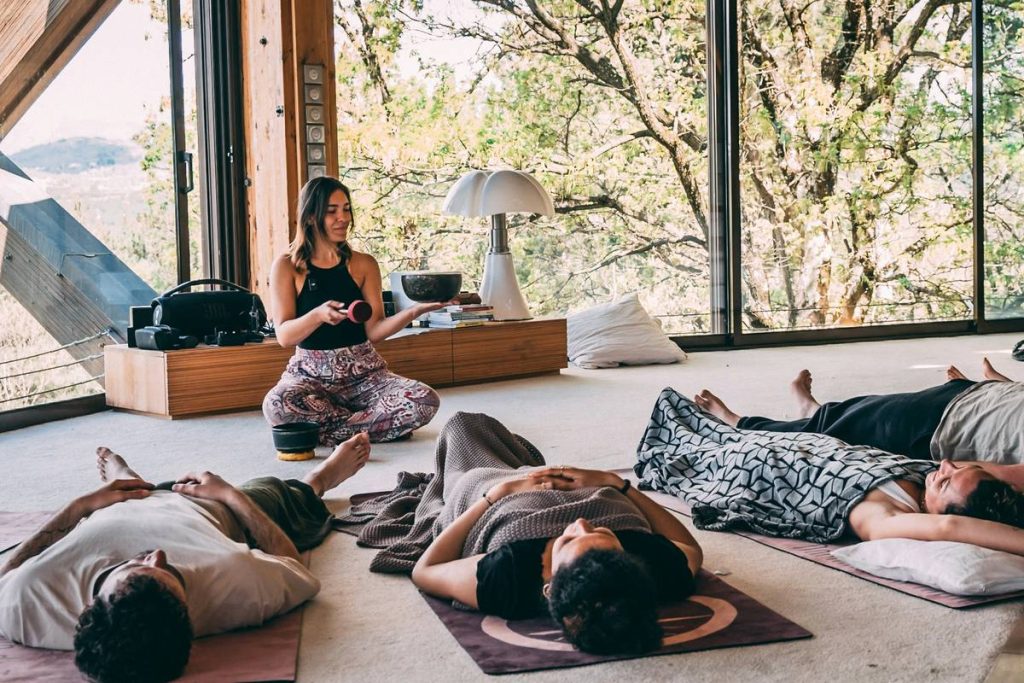
Lie down or sit comfortably. Slowly direct attention from toes to crown, noticing sensations without judgment. If your knee tingles or your jaw clenches, just witness it. No need to “fix” anything.
Pro tip: Do this lying down if seated stillness spikes your anxiety. The support reduces physical vigilance.
“Breathing makes me dizzy!” → Try: Anchored Awareness
If breath focus triggers hyperventilation (common in panic), anchor elsewhere: the weight of your hands on your lap, ambient sounds, or a candle flame. The goal isn’t the object—it’s returning gently when distracted.
Grumpy You: “Ugh, fine—but only if I can stare at my cat napping instead of some stupid candle.”
Optimist You: “Exactly! Your cat is a perfect anchor. Go for it.”
“I need to move!” → Try: Walking Meditation
Walk slowly (even indoors!). Sync steps with breath: inhale for 2 steps, exhale for 3. Feel feet lift, move, contact ground. When thoughts drift, return to footsteps.
Science says: Combining gentle motion with mindfulness lowers cortisol faster than seated practice alone (Frontiers in Psychology, 2018).
“I feel disconnected!” → Try: Loving-Kindness (Metta)
Repeat phrases like “May I be safe. May I be calm.” Then extend to others: “May you be free from suffering.” This counters anxiety’s self-isolating narrative.
Caveat: Skip this if self-directed kindness feels triggering—start with neutral beings (“May this tree be peaceful”).
Best Practices for Maximum Calm
- Start micro: 3–5 minutes daily > 30 minutes weekly. Consistency rewires neural pathways.
- Time it right: Practice when anxiety is mild—not mid-panic. Build capacity first.
- Ditch perfection: Missed a day? Forgot to “empty your mind”? Good. That’s the practice.
- Pair with ritual: Light a specific candle, play a chime, or sip herbal tea post-session. Cues strengthen habit loops.
- Avoid this terrible tip: “Just clear your mind!” Nope. Minds think. Your job is to relate differently to thoughts—not delete them.
Rant section: I’m side-eyeing every app that sells “instant calm” with nature sounds over stock photos of serene yogis. Real anxiety relief isn’t passive. It’s showing up messy, distracted, and impatient—and doing it anyway. That’s the work.
Real People, Real Relief: Case Studies
Sarah, 34, Social Anxiety: Avoided group settings for years. Started with 4-minute audio-guided body scans during lunch breaks. After 8 weeks, she joined a book club. “Noticing my throat tighten without spiraling changed everything,” she said.
Marcus, 28, Panic Disorder: Breath focus triggered dizziness. Switched to walking meditation around his apartment. Within 3 weeks, panic attack frequency dropped from 4x/week to 1x/month. Now he teaches the method to ER patients as a nurse.
Evidence base: These align with APA-endorsed protocols where somatic grounding precedes cognitive reframing.
FAQs: Meditation and Anxiety
How long until I see results?
Most studies (like MBSR trials) show significant reductions in 6–8 weeks with daily practice. But many report subtle shifts—like pausing before reacting—in as little as 3–5 days.
Can meditation make anxiety worse?
Temporarily, yes—especially with trauma or severe OCD. Sitting still can amplify distress if unsupported. Always consult a therapist first if you have PTSD or dissociation. Start with guided sessions (free MBSR course is vetted).
What’s the best app for anxiety-specific meditation?
Insight Timer (free) offers thousands of anxiety-tagged meditations with teachers like Dr. Judson Brewer (neuroscientist). Avoid apps pushing “manifestation” over evidence-based methods.
Do I need to sit cross-legged?
Hard no. Chair, bed, park bench—anywhere you’re safely supported. Posture matters less than presence.
Conclusion
Meditation techniques for anxiety aren’t about achieving zen emptiness. They’re about building a kinder relationship with your nervous system—one distracted, itchy, imperfect session at a time. Start small. Choose a method that meets you where you are (not where Pinterest says you should be). And remember: the goal isn’t to never feel anxious again. It’s to know, deep in your bones, that you can handle it when it comes.
Like a Tamagotchi, your resilience needs daily care—not perfection. Feed it five minutes. Watch what grows.
Thoughts race loud
Breathe into the pause space
Calm roots deepen